
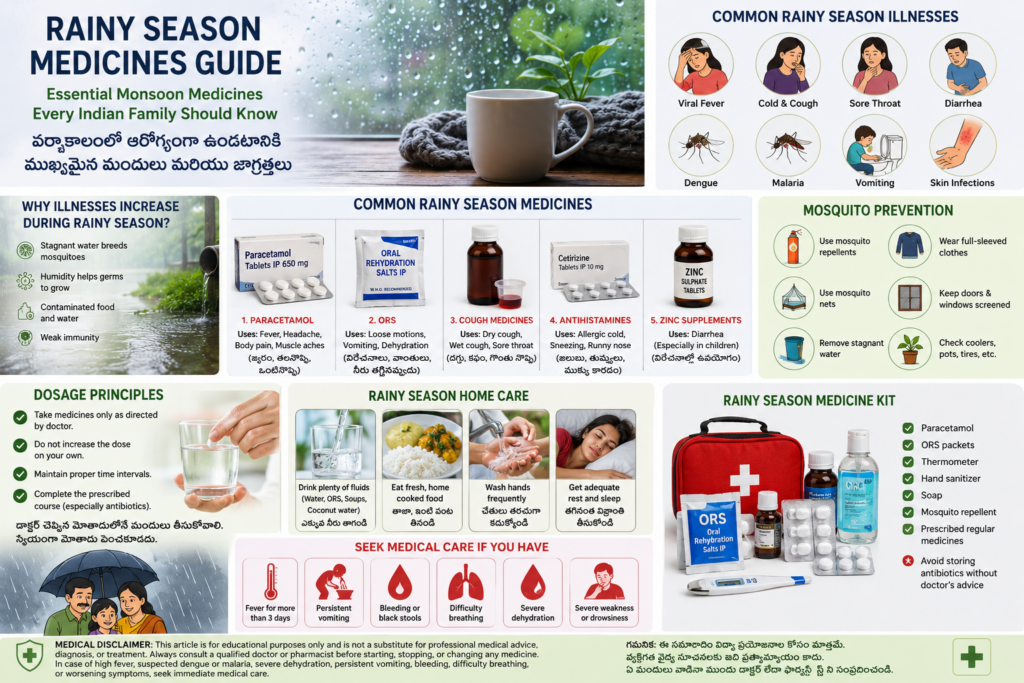
The rainy season (monsoon) brings relief from the summer heat, but it also increases the risk of infections such as viral fever, cough, cold, sore throat, diarrhea, dengue, malaria, and food poisoning. Many families experience fever, body pain, vomiting, loose motions, and mosquito-related illnesses during this season. A basic understanding of rainy season medicines can help people manage minor illnesses safely while knowing when to seek medical care. During the monsoon in India, viral fever, dengue, malaria, and water-borne illnesses commonly increase, so supportive care with hydration and appropriate fever treatment becomes important. Clean water, food hygiene, and mosquito prevention are key protective measures.
తెలుగులో: వర్షాకాలంలో జ్వరం, జలుబు, దగ్గు, విరేచనాలు, డెంగ్యూ, మలేరియా వంటి సమస్యలు ఎక్కువగా కనిపిస్తాయి. సరైన మందులు, శుభ్రమైన నీరు, మరియు దోమల నివారణ చాలా ముఖ్యమైనవి.
Why do illnesses increase during the rainy season?
Rainwater, humidity, stagnant water, and contaminated food and water create favorable conditions for germs and mosquitoes.
Common rainy season illnesses include:
- Viral fever
- Common cold and cough
- Sore throat
- Diarrhea (loose motions)
- Vomiting
- Food poisoning
- Dengue fever
- Malaria
- Chikungunya
- Fungal skin infections
Common rainy season medicines
1. Paracetamol (Acetaminophen)
Paracetamol is the most commonly used medicine for fever and body pain.
Uses:
- Fever
- Headache
- Body pain
- Muscle aches
తెలుగులో: జ్వరం, తలనొప్పి, ఒంటినొప్పికి పారాసిటమాల్ సాధారణంగా ఉపయోగిస్తారు.
Important: During suspected dengue, paracetamol is usually preferred for fever relief, while painkillers such as ibuprofen, diclofenac, or aspirin should be avoided unless prescribed.
2. ORS (Oral Rehydration Salts)
ORS helps replace water and salts lost due to diarrhea, vomiting, or fever.
Uses:
- Loose motions
- Vomiting
- Dehydration
- High fever with poor fluid intake
తెలుగులో: విరేచనాలు, వాంతులు, జ్వరం వల్ల శరీరంలో నీరు తగ్గినప్పుడు ORS చాలా ఉపయోగపడుతుంది.
3. Cough medicines
Depending on the type of cough, doctors may recommend:
- Dry cough medicines
- Wet cough (productive cough) medicines
- Expectorants to loosen mucus
Do not use cough syrups for children unless advised by a doctor.
4. Antihistamines
These medicines may help with:
- Sneezing
- Runny nose
- Allergic cold
- Itching
Some antihistamines can cause drowsiness (నిద్ర మత్తు).
5. Zinc supplements
Zinc may be recommended for some cases of diarrhea, especially in children.
Dosage principles
The exact dose depends on:
- Age
- Body weight
- Kidney and liver function
- Pregnancy status
- Other medical conditions
General principles
- Take medicines only as directed.
- Do not increase the dose on your own.
- Maintain proper time intervals.
- Complete the prescribed course if an antibiotic has been prescribed.
తెలుగులో: డాక్టర్ చెప్పిన మోతాదులోనే మందులు తీసుకోవాలి. స్వయంగా మోతాదు పెంచకూడదు.
Side effects of common rainy season medicines
Paracetamol
Possible side effects:
- Nausea
- Rash
- Liver damage in overdose
ORS
Usually very safe when prepared correctly.
Possible problems:
- Incorrect mixing
- Excessive intake in certain medical conditions
Antihistamines
May cause:
- Sleepiness
- Dizziness
- Dry mouth
- Reduced alertness
Cough syrups
Some may cause:
- Drowsiness
- Nausea
- Constipation
- Dizziness
Important precautions
Avoid self-medication with antibiotics
Many viral fevers do not require antibiotics.
Unnecessary antibiotic use can lead to:
- Antibiotic resistance
- Side effects
- Stomach problems
తెలుగులో: వైరల్ జ్వరాలకు యాంటీబయోటిక్స్ అవసరం లేకపోవచ్చు. డాక్టర్ సలహా లేకుండా వాడకండి.
Fever during the rainy season may not be a simple viral fever
Symptoms of viral fever, dengue, malaria, and typhoid can overlap.
Seek medical evaluation if:
- Fever lasts more than 2–3 days
- High fever persists
- Severe weakness develops
- Bleeding occurs
- Persistent vomiting occurs
- Severe abdominal pain occurs
- Breathing difficulty occurs
Drug interactions
Paracetamol interactions
Use caution with:
- Alcohol
- Some anti-tuberculosis medicines
- Certain anti-seizure medicines
- Other medicines containing paracetamol
Antihistamine interactions
May increase drowsiness when taken with:
- Sleeping tablets
- Anxiety medicines
- Alcohol
- Some pain medicines
Cough syrup interactions
Some cough syrups may interact with:
- Antidepressants
- Sedatives
- Alcohol
Always tell your doctor about all medicines you are taking.
Rainy season home care
Medicines alone are not enough.
Drink plenty of fluids
- Clean water
- ORS
- Coconut water (if appropriate)
- Soups
Eat safe food
Avoid:
- Street food
- Cut fruits
- Contaminated water
- Uncooked food
Eat:
- Freshly cooked food
- Rice
- Dal
- Vegetables
- Fruits washed properly
Get adequate rest
Fever and viral infections usually require:
- Rest
- Sleep
- Hydration
- Nutritious food
Mosquito prevention
Dengue and malaria are common during the rainy season.
Protect yourself
- Use mosquito repellents
- Wear full-sleeved clothes
- Use mosquito nets
- Keep doors and windows screened
- Remove stagnant water from:
- Buckets
- Coolers
- Flower pots
- Tires
- Roof containers
తెలుగులో: ఇంటి చుట్టూ నిల్వ నీరు ఉండకుండా చూడాలి. దోమల నివారణ చాలా ముఖ్యం.
A basic rainy season medicine kit
A family may consider keeping:
- Paracetamol
- ORS packets
- Thermometer
- Hand sanitizer
- Soap
- Mosquito repellent
- Oral hydration fluids
- Doctor-prescribed regular medicines
Avoid storing antibiotics without medical advice.
When should children see a doctor urgently?
Seek immediate medical care if a child has:
- High fever
- Repeated vomiting
- Refusal to drink fluids
- Drowsiness
- Seizures
- Breathing difficulty
- Rash with fever
- Reduced urine output
When should adults seek urgent medical care?
Seek medical help if you have:
- Fever for more than 3 days
- Severe headache
- Neck stiffness
- Chest pain
- Difficulty breathing
- Blood in stools
- Black stools
- Severe dehydration
- Confusion
- Persistent vomiting
Frequently asked questions (FAQs)
Can I take paracetamol for rainy season fever?
Paracetamol is commonly used for fever and body pain, but persistent fever should be evaluated by a doctor.
Can I take antibiotics for viral fever?
No. Viral fever usually does not improve with antibiotics unless a bacterial infection is confirmed.
Is ORS useful for fever?
ORS is mainly useful when dehydration is present due to fever, diarrhea, vomiting, or poor fluid intake.
Can I take ibuprofen for fever?
During suspected dengue, ibuprofen and similar painkillers should generally be avoided unless advised by a doctor.
How long does viral fever usually last?
Many viral fevers improve within 3–5 days, but persistent or worsening symptoms require medical evaluation.
Can I use herbal remedies instead of medicines?
Home remedies may provide comfort, but they should not replace appropriate medical treatment, especially for dengue, malaria, or severe infections.
Monsoon health tips
- Drink boiled or purified water.
- Wash hands frequently.
- Avoid stagnant water.
- Use mosquito protection.
- Eat freshly cooked food.
- Do not ignore fever.
- Stay hydrated.
- Avoid unnecessary antibiotics.
Conclusion
Rainy season illnesses are common in India, but most mild infections can be managed safely with proper hydration, rest, and appropriate medicines such as paracetamol and ORS. However, persistent fever, severe weakness, bleeding, dehydration, or breathing difficulty should never be ignored. Dengue, malaria, and other monsoon infections can become serious if diagnosis is delayed. Preventive measures such as mosquito control, clean drinking water, and food hygiene remain the most effective way to stay healthy during the rainy season.
తెలుగులో ముగింపు: వర్షాకాలంలో జ్వరం, జలుబు, విరేచనాలు, డెంగ్యూ వంటి సమస్యలు ఎక్కువగా వస్తాయి. ORS, పారాసిటమాల్ వంటి మందులు కొన్ని సందర్భాల్లో ఉపయోగపడినా, ఎక్కువ రోజులు జ్వరం ఉంటే లేదా తీవ్రమైన లక్షణాలు ఉంటే వెంటనే డాక్టర్ను సంప్రదించాలి.
Medical disclaimer
This article is for educational purposes only and is not a substitute for professional medical advice, diagnosis, or treatment. Always consult a qualified doctor or pharmacist before starting, stopping, or changing any medicine. In case of high fever, suspected dengue or malaria, severe dehydration, persistent vomiting, bleeding, difficulty breathing, or worsening symptoms, seek immediate medical care.
Author: Maddela Shekar, D. Pharmacy
Pharmacist | Health Educator | Founder of HealthVista360
Providing reliable health and medicine information in English & Telugu.