
What Are Antibiotics?
Antibiotics are medicines used to treat certain bacterial infections. They either kill bacteria or stop them from multiplying. They do not work against viruses, which commonly cause colds, flu, many coughs and most sore throats.nhs+1
తెలుగులో: యాంటీబయాటిక్స్ బ్యాక్టీరియా వల్ల వచ్చే కొన్ని ఇన్ఫెక్షన్లను తగ్గించే మందులు. జలుబు, సాధారణ వైరల్ జ్వరం, ఫ్లూ వంటి వైరస్ ఇన్ఫెక్షన్లకు ఇవి పనిచేయవు.
Many children recover from viral illnesses with rest, fluids and supportive care. Giving an antibiotic when it is not needed may cause side effects and increase antibiotic resistance. Resistance means bacteria become harder to kill, so commonly used medicines may stop working effectively.
When Do Children Need Antibiotics?
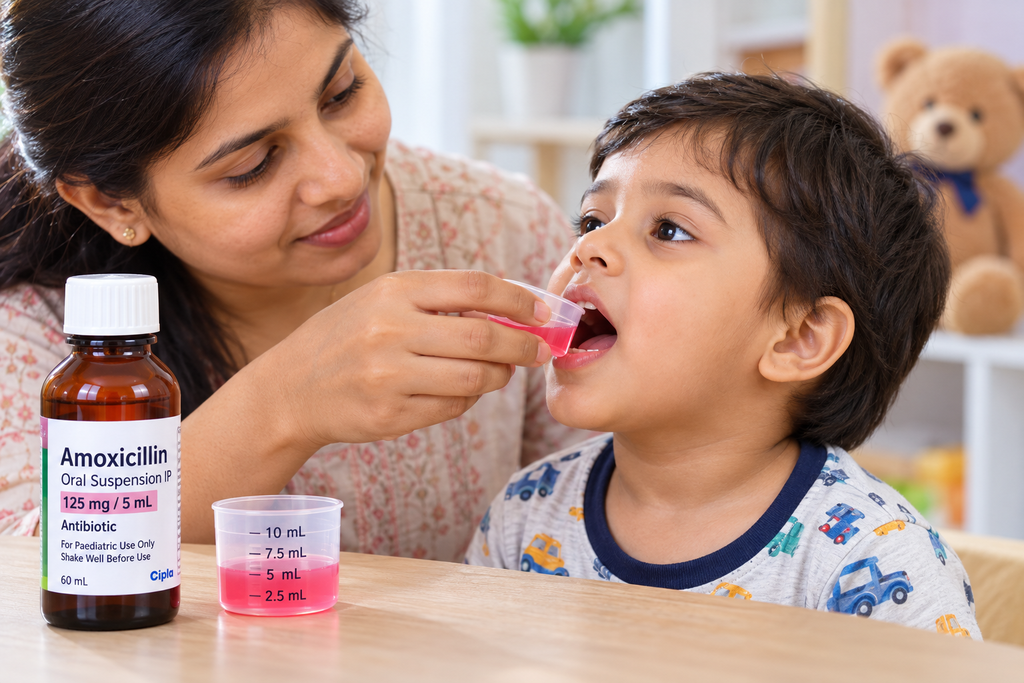
A doctor may prescribe an antibiotic when a bacterial infection is suspected or confirmed. Examples can include:
- Some ear infections.
- Certain bacterial throat infections.
- Some urinary tract infections.
- Bacterial pneumonia.
- Certain skin and soft-tissue infections.
- Some intestinal or other bacterial infections.
- Prevention of infection in selected medical or surgical situations.
The choice depends on the child’s age, weight, symptoms, examination findings, allergies, kidney and liver health, previous medicines, and local antibiotic-resistance patterns.
A fever alone does not mean that a child needs an antibiotic. Cough, runny nose and sore throat are often caused by viruses. Parents should not use leftover medicines or an antibiotic prescribed for another family member. The wrong medicine may not treat the infection and may delay proper care.kidshealth.org+1
తెలుగులో: పిల్లలకు జ్వరం ఉందని మాత్రమే యాంటీబయాటిక్ ఇవ్వకూడదు. వైరల్ జ్వరాలకు యాంటీబయాటిక్స్ సాధారణంగా ఉపయోగం ఉండదు. డాక్టర్ సూచిస్తే మాత్రమే ఇవ్వాలి
Common Antibiotics for Children
Doctors may prescribe different antibiotics for different infections. Some commonly known groups include:
- Amoxicillin or amoxicillin–clavulanate: Used for selected ear, sinus, chest or other bacterial infections.
- Cefixime or other cephalosporins: Used in certain bacterial infections when clinically appropriate.
- Azithromycin or clarithromycin: Used for selected infections, including some infections caused by atypical bacteria.
- Cloxacillin or related medicines: Used for some bacterial skin infections.
- Metronidazole: Used for specific infections involving anaerobic bacteria or certain parasites.
These examples do not mean that a particular medicine is suitable for every child. Antibiotics are not interchangeable. The doctor must select the correct drug, strength and duration.
Dosage Principles for Children
Children’s doses are often calculated according to body weight, commonly written as milligrams per kilogram, or mg/kg. The dose may also depend on the infection and the child’s kidney or liver function.
Important principles include:
- Give only the medicine, strength and amount prescribed.
- Follow the timing on the label, such as once, twice or three times daily.
- Use an oral syringe or the measuring device supplied with the medicine.
- Do not use a household teaspoon because spoon sizes differ.
- Check whether the liquid must be shaken before every dose.
- Read storage instructions carefully.
- Complete the prescribed duration unless the doctor changes the plan.
- Never increase the dose because the child appears very unwell.
- Never give an adult tablet to a child unless a doctor specifically instructs you.
- Do not share antibiotics between children.
తెలుగులో: పిల్లల యాంటీబయాటిక్ మోతాదు సాధారణంగా బరువును బట్టి నిర్ణయిస్తారు. “ఎంత ఇవ్వాలి?” అనే విషయాన్ని ఇంట్లో అంచనా వేయకండి. డాక్టర్ రాసిన మోతాదు, సమయం, రోజుల సంఖ్యను మాత్రమే పాటించండి.
Liquid medicines
Some antibiotics come as dry powder that must be mixed with water. A pharmacist should prepare it correctly, or the label should explain how to add the required amount of water. Adding too much or too little water changes the concentration and may result in an incorrect dose.
Ask the pharmacist:
- Whether the bottle should be refrigerated.
- How many days the prepared liquid can be used.
- Whether it should be shaken.
- How to dispose of the remaining medicine.
What If a Dose Is Missed?
If a dose is forgotten, follow the medicine label or ask the prescribing doctor or pharmacist. In general, a missed dose may be taken when remembered unless it is nearly time for the next dose. If the next dose is due soon, skipping the missed dose may be advised. Do not give two doses together unless a qualified healthcare professional specifically tells you to do so.kidshealth.org
Write down the dose times or set an alarm. This is especially helpful when parents or grandparents share childcare responsibilities.
Common Side Effects
Many children take antibiotics safely, but side effects can occur. Common effects include:
- Nausea.
- Vomiting.
- Loose stools or mild diarrhoea.
- Stomach discomfort.
- Reduced appetite.
- Mild skin rash.
- Oral or genital thrush, caused by overgrowth of yeast.
Give the medicine exactly as prescribed. If vomiting occurs soon after a dose, do not automatically repeat it. Ask a doctor or pharmacist, because the advice depends on how much medicine may have been absorbed.
Diarrhoea can occur during or after antibiotic treatment. Give fluids as appropriate for the child’s age. Contact a healthcare professional if diarrhoea is severe, persistent, bloody, or associated with significant abdominal pain or dehydration.kidshealth.org
Serious Side Effects: Seek Urgent Help
Stop and seek urgent medical assistance if a child develops possible signs of a severe allergic reaction, such as:
- Swelling of the lips, face, tongue or throat.
- Wheezing or difficulty breathing.
- Fainting, unusual sleepiness or collapse.
- Widespread itchy rash.
- Blistering or peeling skin.
- Severe weakness or unresponsiveness.
In India, call 112 for emergency assistance where available, or go immediately to the nearest emergency department. Do not wait for the next scheduled dose.
A mild rash can have many causes, including the infection itself, but every new rash during antibiotic treatment should be discussed with a doctor.
Precautions Before Giving an Antibiotic
Tell the doctor or pharmacist if the child has:
- A previous allergy to an antibiotic.
- Kidney or liver disease.
- Seizures or another significant medical condition.
- A history of severe diarrhoea after antibiotics.
- Difficulty swallowing medicines.
- Current medicines, supplements or herbal products.
- Recent antibiotic use.
- A weakened immune system.
Keep a record of the medicine name and the reaction if the child has ever had an allergy. “Stomach upset” and “breathing difficulty with swelling” are not the same type of reaction, so describe symptoms clearly.
Never give a child an antibiotic bought without a prescription. In India, medicines may have similar names but different strengths. Confusing a suspension, tablet, dispersible tablet or concentrated drops can lead to overdose or treatment failure.
Drug Interactions
Some antibiotics can interact with other medicines. The risk depends on the specific antibiotic and the child’s health. Possible concerns include:
- Medicines that affect the heart rhythm.
- Some anti-seizure medicines.
- Blood thinners.
- Certain antacids or mineral supplements containing aluminium, magnesium, iron or calcium.
- Other medicines that may affect the kidneys or liver.
- Some cough, cold or herbal products.
- Certain vaccines or specialised treatments in particular situations.
Do not assume that a medicine is safe because it is available without a prescription. Tell the doctor about every medicine the child takes, including paracetamol, ibuprofen, vitamins, probiotics and ayurvedic or herbal preparations.
For some antibiotics, dairy products or mineral supplements may reduce absorption if taken at the same time. This is not true for every antibiotic, so follow the product-specific instructions from the doctor or pharmacist.
Antibiotic Resistance: Why Responsible Use Matters
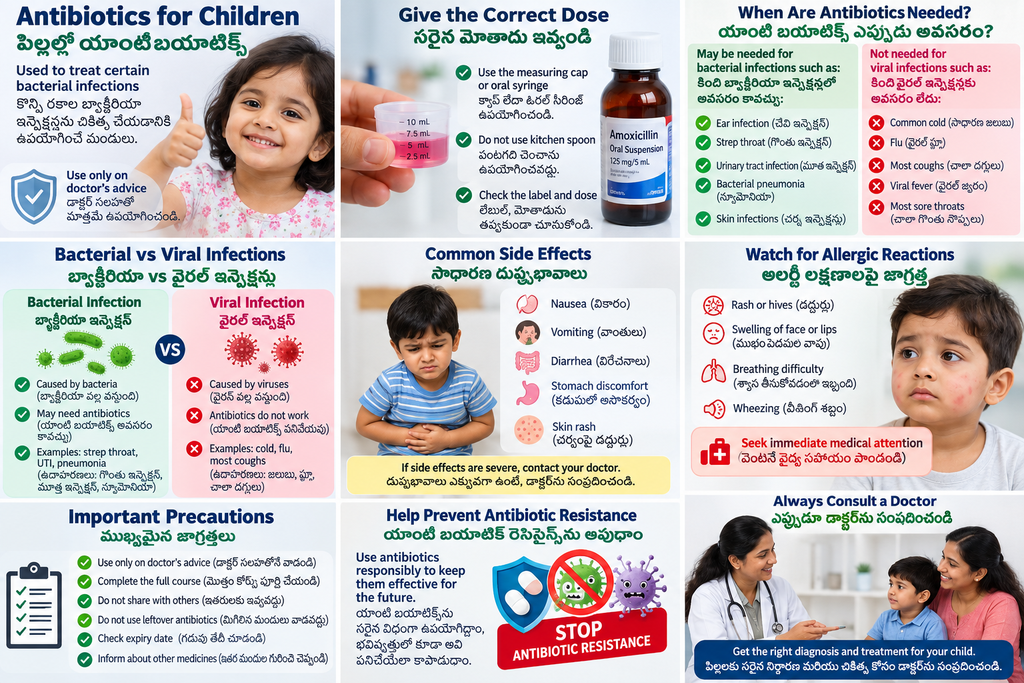
When antibiotics are used unnecessarily, bacteria may adapt and become resistant. Resistant infections can require stronger, more expensive or injectable treatment. They may also spread to other people.
Parents can help by:
- Using antibiotics only when prescribed.
- Giving the exact dose and schedule.
- Not saving leftover medicine.
- Not sharing medicine.
- Not demanding an antibiotic for every fever or cold.
- Completing the prescribed course unless the doctor advises otherwise.
- Returning or disposing of leftover medicine safely according to local pharmacy guidance.
The goal is not to avoid antibiotics when they are genuinely needed. The goal is to use the right antibiotic, for the right infection, at the right dose and for the right duration.
తెలుగు వివరణ: యాంటీబయాటిక్ రెసిస్టెన్స్ ప్రజారోగ్యానికి సంబంధించిన ముఖ్యమైన సమస్య. బ్యాక్టీరియా యాంటీబయాటిక్ ప్రభావాన్ని తట్టుకుని జీవించగలిగితే, తరువాత అదే మందు పనిచేయకపోవచ్చు. అవసరమైనప్పుడు మాత్రమే యాంటీబయాటిక్ వాడటం పిల్లవాడిని మరియు సమాజంలోని ఇతరులను రక్షించడంలో సహాయపడుతుంది.
Responsible-use checklist
- Use antibiotics only when prescribed.
- వైద్యుడు సూచించినప్పుడు మాత్రమే యాంటీబయాటిక్స్ వాడండి.
- Give the prescribed dose at the prescribed times.
- రాసిన మోతాదును, రాసిన సమయాల్లోనే ఇవ్వండి.
- Do not use leftover or expired medicine.
- మిగిలిన లేదా expiry అయిన మందును వాడకండి.
- Do not share medicine with siblings or neighbours.
- అన్నదమ్ములు, అక్కచెల్లెళ్లు లేదా పొరుగువారితో మందు పంచకండి.
- Do not insist on antibiotics for every cold or fever.
- ప్రతి జలుబు లేదా జ్వరానికి యాంటీబయాటిక్ కావాలని పట్టుబట్టకండి.
- Ask how to dispose of unused medicine safely.
- ఉపయోగించని మందును సురక్షితంగా ఎలా పారవేయాలో ఫార్మసిస్ట్ను అడగండి.
FAQs: Antibiotics for Children
1. Can antibiotics treat a common cold?
English: Usually, no. A common cold is generally caused by a virus, and antibiotics do not kill viruses. A doctor may reassess the child if symptoms become severe, last longer than expected or suggest a bacterial complication.
తెలుగు: సాధారణంగా కాదు. జలుబు ఎక్కువగా వైరస్ వల్ల వస్తుంది, వైరస్లను యాంటీబయాటిక్స్ చంపలేవు. లక్షణాలు తీవ్రమైతే, సాధారణంగా ఉండే కాలం కంటే ఎక్కువ కొనసాగితే లేదా బ్యాక్టీరియా ఇన్ఫెక్షన్ అనుమానం ఉంటే వైద్యుడు మళ్లీ పరీక్షించవచ్చు.
2. Should I give an antibiotic for fever?
English: No. Fever alone does not prove a bacterial infection. The cause of fever should be assessed by a healthcare professional when medical review is needed.
తెలుగు: ఇవ్వకూడదు. జ్వరం మాత్రమే ఉందని బ్యాక్టీరియా ఇన్ఫెక్షన్ అని చెప్పలేం. అవసరమైతే వైద్యుడు జ్వరానికి కారణాన్ని పరీక్షించి తగిన చికిత్సను సూచించాలి.
3. Can I stop the antibiotic when my child feels better?
English: Do not change the prescribed course without contacting the prescriber. The doctor may sometimes modify or stop treatment, but parents should not make that decision independently.
తెలుగు: పిల్లవాడికి త్వరగా మెరుగుదల కనిపించినా, వైద్యుడిని సంప్రదించకుండా కోర్సును మార్చకండి. కొన్ని పరిస్థితుల్లో వైద్యుడే మందును మార్చవచ్చు లేదా ఆపవచ్చు; ఆ నిర్ణయం తల్లిదండ్రులు స్వయంగా తీసుకోకూడదు.
4. Can I use leftover antibiotics from a previous illness?
English: No. The present illness may have a different cause, and the old medicine may be unsuitable, expired or incorrectly dosed.
తెలుగు: వద్దు. ప్రస్తుత అనారోగ్యానికి పాత అనారోగ్యానికి కారణమైనది వేరుగా ఉండవచ్చు. పాత మందు సరైనది కాకపోవచ్చు, expiry అయి ఉండవచ్చు లేదా పిల్లల ప్రస్తుత బరువుకు తగిన మోతాదు కాకపోవచ్చు.
5. What should I do if my child vomits after a dose?
English: Do not automatically repeat the dose. Contact a doctor or pharmacist and provide the medicine name, dose and approximate time between taking the medicine and vomiting.
తెలుగు: వెంటనే అదే మోతాదును మళ్లీ ఇవ్వకండి. మందు పేరు, ఇచ్చిన మోతాదు, మందు ఇచ్చిన తర్వాత ఎంతసేపటికి వాంతి అయ్యిందో వైద్యుడు లేదా ఫార్మసిస్ట్కు చెప్పి సూచనలు పొందండి.
6. How should I measure antibiotic syrup?
English: Use the oral syringe or measuring device supplied with the medicine. A household spoon may give an inaccurate amount.
తెలుగు: మందుతో ఇచ్చిన oral syringe లేదా measuring device ఉపయోగించండి. ఇంటి టీస్పూన్తో కొలిస్తే సరైన పరిమాణం రాకపోవచ్చు, దాంతో తక్కువ లేదా ఎక్కువ మందు ఇవ్వబడే ప్రమాదం ఉంటుంది.
7. Are probiotics necessary with antibiotics?
English: Not for every child. Ask a paediatrician or pharmacist before using a probiotic, especially if the child is seriously ill or has a weakened immune system. Probiotics must not replace prescribed treatment.
తెలుగు: ప్రతి పిల్లవాడికి probiotics అవసరం ఉండదు. పిల్లవాడికి తీవ్రమైన అనారోగ్యం లేదా బలహీనమైన రోగనిరోధక శక్తి ఉంటే ప్రత్యేకంగా జాగ్రత్త అవసరం. వైద్యుడిని లేదా ఫార్మసిస్ట్ను అడిగిన తర్వాతే వాడండి. Probiotics యాంటీబయాటిక్ చికిత్సకు ప్రత్యామ్నాయం కావు.
8. When should I seek emergency help?
English: Seek immediate help for breathing difficulty, swelling of the face or throat, collapse, severe dehydration, seizures, bloody diarrhoea, blistering skin or a child who is difficult to wake.
తెలుగు: శ్వాస తీసుకోవడంలో ఇబ్బంది, ముఖం లేదా గొంతు వాపు, కుప్పకూలడం, తీవ్రమైన డీహైడ్రేషన్, fits, రక్తంతో కూడిన విరేచనాలు, చర్మంపై బుడగలు లేదా పిల్లవాడిని మేల్కొలపడం కష్టంగా ఉండటం వంటి లక్షణాలు ఉంటే వెంటనే అత్యవసర వైద్య సహాయం పొందండి.
Final Safety Message
Antibiotics can be very helpful when a child has a bacterial infection, but they are not medicines for every fever, cold or cough. Use them only under qualified medical guidance, measure every dose accurately and watch for allergic or severe reactions.
తెలుగు: పిల్లవాడికి బ్యాక్టీరియా ఇన్ఫెక్షన్ ఉన్నప్పుడు యాంటీబయాటిక్స్ ఎంతో ఉపయోగపడవచ్చు. కానీ ప్రతి జ్వరం, జలుబు లేదా దగ్గుకు ఇవి అవసరం ఉండదు. అర్హత కలిగిన వైద్యుడి సలహాతో మాత్రమే మందు ఇవ్వండి, ప్రతి మోతాదును సరిగ్గా కొలవండి, అలర్జీ లేదా తీవ్రమైన దుష్ప్రభావాల లక్షణాలను గమనించండి.
Medical Disclaimer
English: This article is general educational information for Indian readers. It is not a prescription, diagnosis or substitute for consultation with a qualified paediatrician. Antibiotic selection, dosage and duration depend on the child’s age, weight, medical history, examination and sometimes test results. For a sick child, contact a qualified healthcare professional. In an emergency, seek immediate hospital care or call 112 where available.
తెలుగు: ఈ వ్యాసం భారతీయ పాఠకుల కోసం సాధారణ ఆరోగ్య అవగాహన సమాచారంగా మాత్రమే ఇవ్వబడింది. ఇది prescription, diagnosis లేదా పిల్లల వైద్యుడి ప్రత్యక్ష సలహాకు ప్రత్యామ్నాయం కాదు. యాంటీబయాటిక్ ఎంపిక, మోతాదు, ఎన్ని రోజులు ఇవ్వాలి అనే నిర్ణయాలు పిల్లల వయస్సు, బరువు, వైద్య చరిత్ర, పరీక్ష మరియు అవసరమైతే ల్యాబ్ పరీక్షలపై ఆధారపడి ఉంటాయి. పిల్లవాడు అనారోగ్యంగా ఉన్నప్పుడు అర్హత కలిగిన వైద్యుడిని సంప్రదించండి. అత్యవసర పరిస్థితిలో వెంటనే ఆసుపత్రికి తీసుకెళ్లండి లేదా అందుబాటులో ఉన్నచోట 112కు కాల్ చేయండి.
Author: Maddela Shekar, D. Pharmacy
Pharmacist | Health Educator | Founder of HealthVista360
Providing reliable health and medicine information in English & Telugu.